Study results

FDA approval of AQNEURSA for patients with Niemann-Pick disease type C (NPC) was granted based on its robust pivotal study1,2

The trial met all efficacy endpoints1-3

AQNEURSA was evaluated in a Phase III, multinational, randomized (1:1), double-blind, placebo-controlled, crossover trial (N=60).1,2,4
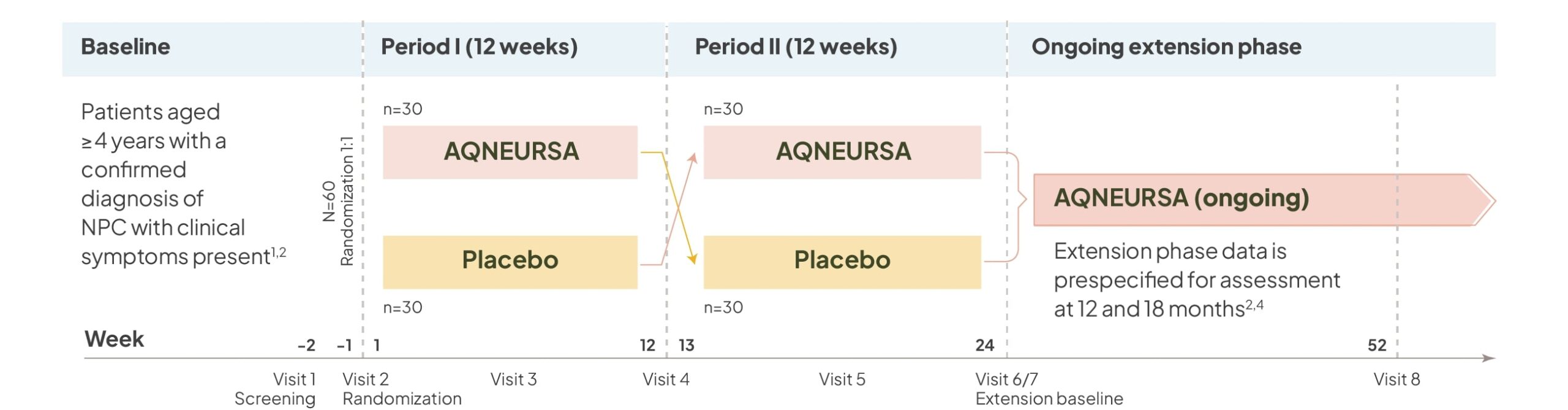
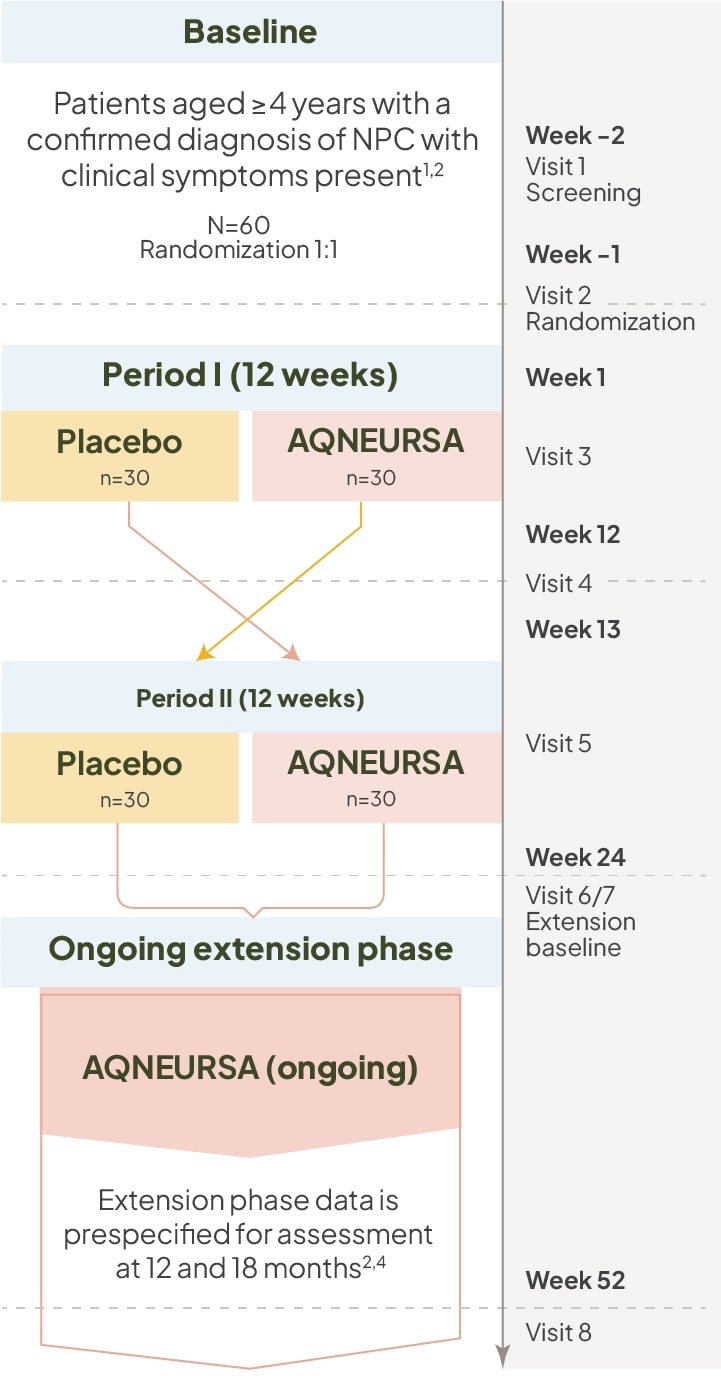
Desktop view of the AQNEURSA clinical trial design for Niemann-Pick disease type CMobile view of the AQNEURSA clinical trial design for Niemann-Pick disease type C
  • Patients received AQNEURSA for 12 weeks and placebo for 12 weeks, with patients randomized 1:1 to receive AQNEURSA or placebo first1

Patients who were on miglustat at the time of enrollment were permitted to continue treatment with miglustat throughout the trial1,4

  • Patients receiving treatment with any investigational therapies other than miglustat were excluded (miglustat is not approved by the FDA for the treatment of NPC)2,5

Heading 4 lorem ipsum

  • Risus nam ipsum mauris nam ullamcorper luctus velit tortor volutpat. Turpis sit auctor placerat id.
  • Senectus posuere semper nibh morbi.
  • Ullamcorper non placerat quisque nulla vitae urna enim sed. Consequat neque tempor a turpis ut at aliquet.

Select inclusion criteria Select exclusion criteria
Male or female aged ≥4 years with a confirmed genetic diagnosis of NPC at the time of signing informed consent.5 Simultaneous treatment with any investigational therapies other than miglustat (miglustat is not approved by the FDA for the treatment of NPC; arimoclomol was not approved by the FDA at the time of the study).2,5
Written informed consent signed by the patient and/or their legal representative/parent/impartial witness.5 Patients who have any known hypersensitivity or history of hypersensitivity to acetyl-leucine (DL-, L-, D-) or derivatives, excipients of the AQNEURSA sachet, or excipients of the placebo sachet.5
Weight ≥15 kg at screening.5 Current or planned pregnancy or women who are breastfeeding.5

Patients must fall within:

  1. A score on the Scale for Assessment and Rating of Ataxia (SARA) of at least 7 and no greater than 34 points (out of 40)5
  2. AND

  3. Either:
    1. Within the 2 to 7 range (out of a 0 to 8 range) of the gait subtest of the SARA scale5
    2. OR

    3. Be able to perform the 9-hole peg test with dominant hand (9HPT-D) (Spinocerebellar Ataxia Functional Index [SCAFI] subtest) in 20 to no more than 150 seconds5
Patients with severe vision or hearing impairment (that is not corrected by glasses or hearing aids) that, at the investigator’s discretion, interferes with their ability to perform study assessments.5

Patients who have been diagnosed with arthritis or other musculoskeletal disorders affecting joints, muscles, ligaments, and/or nerves that by themselves affect the patient’s mobility and, at the investigator’s discretion, interfere with their ability to perform study assessments.5

The primary endpoint of the pivotal trial was assessed using fSARA1,2

fSARA is a modified version of SARA that was derived from FDA guidance to evaluate tangible changes in neurological symptoms and functioning1,2

The SARA is a highly reliable and consistent assessment tool that was validated to measure neurological changes.6

  • SARA comprises functional assessments of 8 domains. Total SARA score ranges from 0 to 40, where 0 is the best neurological status and 40 is the worst 6

Functional SARA (fSARA) comprises functional assessments of 4 domains (derived from the 8 domains included in SARA), each rated from 0 to 4 points. Total fSARA score ranges from 0 to 16, with 0 representing the best neurological status and 16 the worst.1
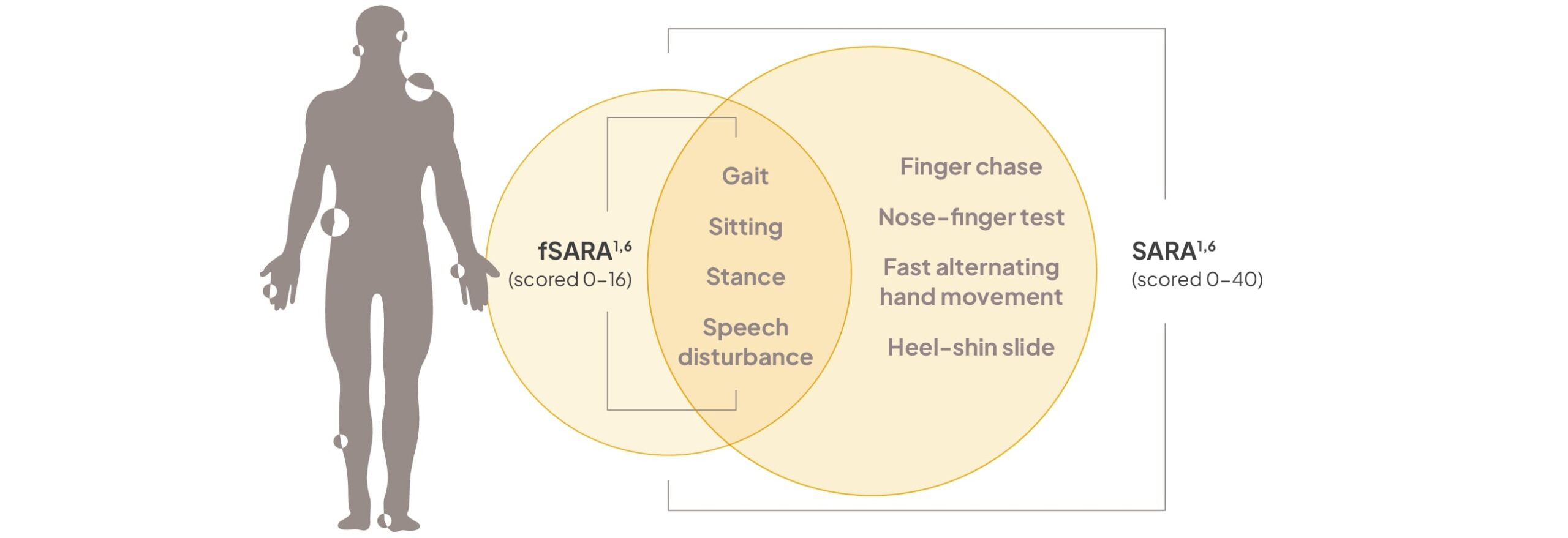
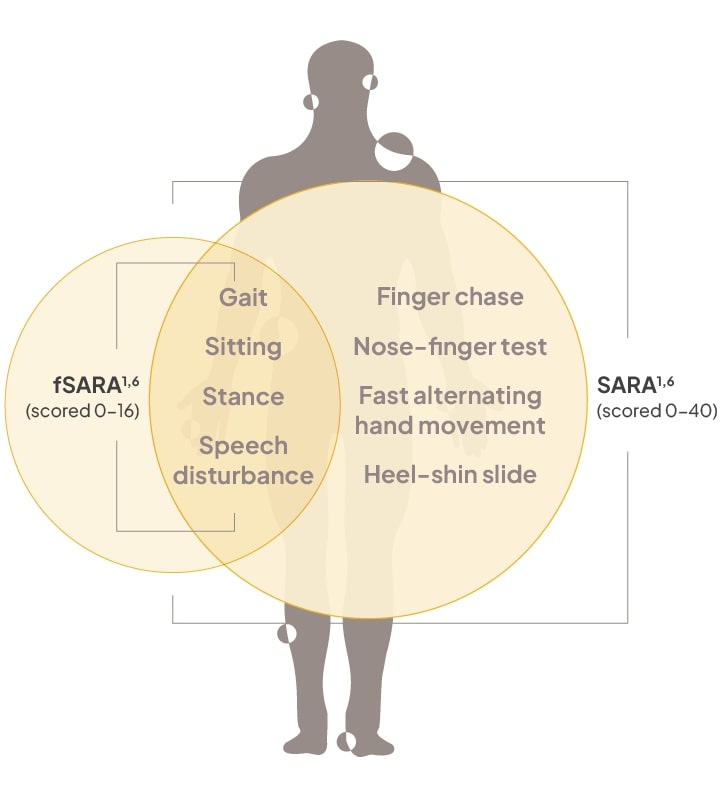
Desktop silhouette illustrating domains assessed in fSARA and SARA trials for Niemann-Pick disease type CMobile silhouette illustrating domains assessed in fSARA and SARA trials for Niemann-Pick disease type C
  • Select secondary endpoints included investigator-rated CGI-I, SCAFI, and mDRS. NPC-CSS was an exploratory endpoint2

CGI-I, Clinical Global Impression of Improvement; mDRS, modified Disability Rating Scale; NPC-CSS, Niemann-Pick disease type C Clinical Severity Scale; SCAFI, Spinocerebellar Ataxia Functional Index.

AQNEURSA significantly improved neurological symptoms and demonstrated functional benefits vs placebo

These important benefits to everyday life were evident within 12 weeks as assessed by fSARA1,2

fSARA results
SARA results
Tab #3 lorem ipsum

AQNEURSA demonstrated significant improvement in fSARA (primary endpoint)1

Estimated treatment benefit of -0.4 points in mean total fSARA score with AQNEURSA vs placebo (95% CI: -0.7 to -0.2; two-sided P < 0.001)1

Desktop view of line graph showing fSARA score at baseline, 6 weeks, 12 weeks, 18 weeks, and 24 weeks with AQNEURSAMobile view of line graph showing fSARA score at baseline, 6 weeks, 12 weeks, 18 weeks, and 24 weeks with AQNEURSA

Consistent improvements in mean total fSARA score from baseline with AQNEURSA in both treatment sequences:
  • Sequence 1 (AQNEURSA in Period I; placebo in Period II): -0.5 points (SD: 1.2) with AQNEURSA vs 0 points (SD: 1.5) with placebo1
  • Sequence 2 (placebo in Period I; AQNEURSA in Period II): -0.7 points (SD: 0.9) with AQNEURSA vs -0.3 points (SD: 0.9) with placebo1

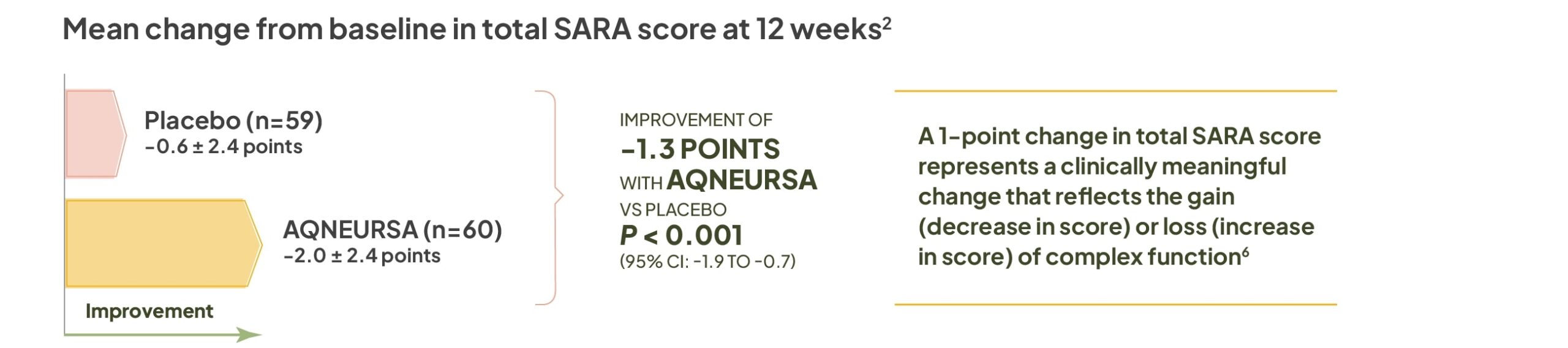
AQNEURSA showed improvement in total SARA score, reinforcing the symptomatic and functional benefits vs placebo2

Efficacy graph comparing AQNEURSA with placebo in SARA score at 12 weeksEfficacy graph comparing AQNEURSA with placebo in SARA score at 12 weeks

CI, confidence interval; SD, standard deviation.

Exit interview quotes from patients or caregivers who were involved in the clinical trial6

  • “There were significant improvements in our daily life. Regular activities are possible more often.”

    – Parents of a child treated with AQNEURSA in the pivotal trial. This is an individual's experience and cannot be considered to reflect the entire population.6,*

    Actual patient not shown.
  • “It was like hitting the pause button on his symptoms.”

    – Parent of a child treated with AQNEURSA in the pivotal trial. This is an individual's experience and cannot be considered to reflect the entire population. 6,*

    Actual patient not shown.
  • “Everyday life is a little easier.”

    – Patient treated with AQNEURSA in the pivotal trial. This is an individual's experience and cannot be considered to reflect the entire population.6,*

    Actual patient not shown.
  • “He could focus better. He responded better. [His] speech was better.”

    – Parent of a child treated with AQNEURSA in the pivotal trial. This is an individual's experience and cannot be considered to reflect the entire population. 6,*

    Actual patient not shown.
*Forty-two exit interviews were conducted with patients, families, and caregivers following the pivotal trial.6

Results with AQNEURSA were consistent across patient subgroups and for all assessed secondary and exploratory endpoints2

Limitations: Subgroup analyses are exploratory and not confirmatory, as they were not prespecified in the study design. Results may have limited statistical power, and statistical significance should not be assumed.

These data are not included in the Prescribing Information for AQNEURSA. No conclusions regarding the benefits or risks can be established based solely on these data.
AQNEURSA can be used with miglustat or as a stand-alone therapy1
  • 51 patients in the pivotal trial received miglustat (85%)1

Key subgroups assessed in the pivotal trial include the following2:

Age group
Pediatric (<18 years) 23 (39%)
Adult (≥18 years) 36 (61%)
Aged 4-9 years 7 (12%)
Aged ≥10 years 52 (88%)
SARA total score at baseline
Median score >14.5 29 (49%)
Median score ≤14.5 30 (51%)
Miglustat use at visit 1, visit 2, or both
Used miglustat 50 (85%)
Did not use miglustat 9 (15%)

Secondary and exploratory endpoint results were consistent with the primary endpoint (fSARA)1,2

  • Secondary endpoints included SCAFI (n=57), mDRS (n=59), and CGI-I (investigator-rated [n=30], caregiver-rated [n=27], and patient-rated [n=24])2
  • NPC-CSS (n=58) was an exploratory endpoint2

The long-term efficacy and safety of AQNEURSA were assessed in an interim 12-month analysis2,4

Limitations: These are interim results and should be interpreted with caution. Interim analyses are based on incomplete data and may be subject to change as the study progresses. Further analysis is needed to confirm these findings.

These data are not in the Prescribing Information for AQNEURSA. No conclusions regarding the benefits or risks can be established based solely on these data.

The open-label extension phase is ongoing, with a second prespecified assessment planned at 18 months2,4

  • Patients who completed the pivotal trial were eligible to enroll in the extension phase2
  • 55 patients (aged 5 to 67 years) who completed the parent study were enrolled in the extension phase4
  • All patients had a genetically confirmed diagnosis of NPC4
  • In July 2024, the extension phase was opened to new patients with NPC of any age who did not participate in the parent study4

The primary endpoint of the extension phase was the 5-domain NPC-CSS at 1 year4

  • The 5-domain NPC-CSS is a validated endpoint that measures the disease progression of NPC after a minimum of 1 year4
  • The 5-domain NPC-CSS comprises 5 domains determined to be the most clinically relevant to patients, caregivers, and clinicians4

5-domain NPC-CSS assessments

Icon representing the ambulation domain as part of the 5-domain NPC-CSS

Ambulation

Icon depicting the cognition assessment domain in patients with NPC

Cognition

Icon for speech domain in 5-domain NPC-CSS

Speech

Icon indicating swallowing domain in 5-domain NPCCSS

Swallowing

Icon illustrating fine motor skills assessment in 5-domain NPC-CSS

Fine motor skills

A 1-point or greater change in the 5-domain NPC-CSS score represents a clinically meaningful change, reflecting the gain (decrease in score) or loss (increase in score) of complex function, as well as disease modification (decrease in score) or disease progression (increase in score)7

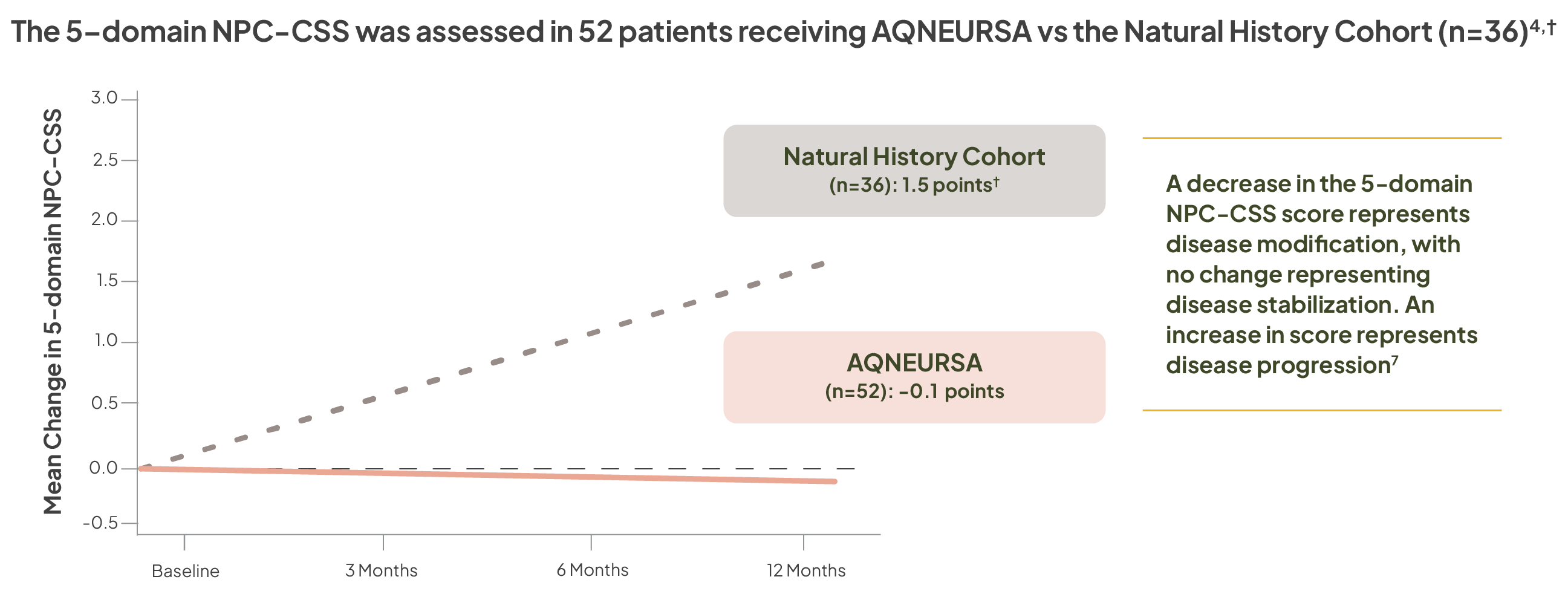
Results from the interim 12-month analysis of the ongoing extension phase4

Limitations: These are interim results and should be interpreted with caution. Interim analyses are based on incomplete data and may be subject to change as the study progresses. Further analysis is needed to confirm these findings.

These data are not in the Prescribing Information for AQNEURSA. No conclusions regarding the benefits or risks can be established based solely on these data.

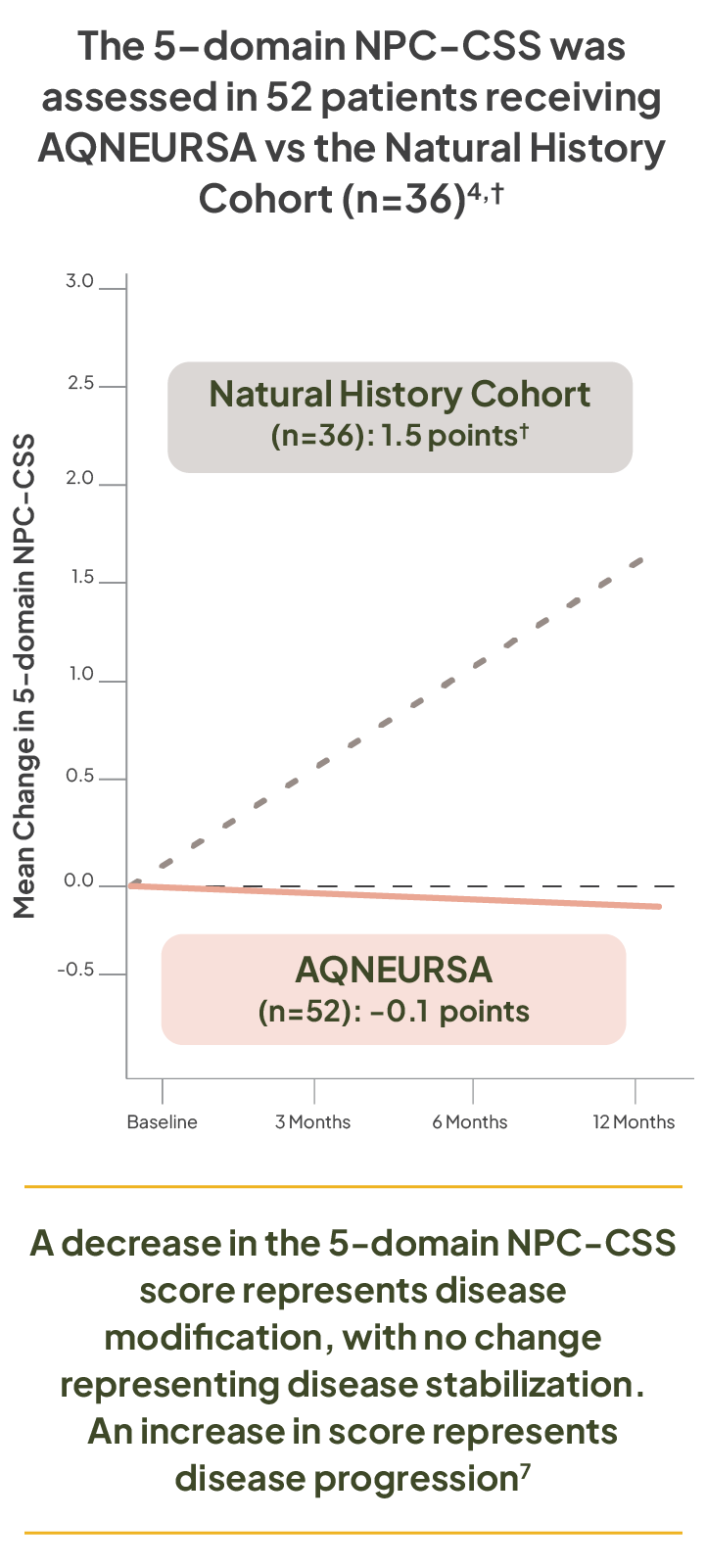
Desktop graph showing treatment benefit with AQNEURSA compared with the Natural History Cohort at 1 yearMobile graph showing treatment benefit with AQNEURSA compared with the Natural History Cohort at 1 year

A decrease in the 5-domain NPC-CSS score represents disease modification, with no change representing disease stabilization. An increase in score represents disease progression7

Total SARA score was an endpoint in the extension phase4

Mean change from baseline in total SARA score2,4
After 12 weeks of treatment
(pivotal trial, n=59)
-2.0 ± 2.4
After 1 year of treatment
(extension phase, n=52)
-1.9 ± 2.9

†The Natural History Cohort is derived from the Prospective Natural History Study in NPC. Patients with NPC in the Natural History Cohort demonstrated an annualized linear progression of 1.5 points on the 5-domain NPC-CSS.4

Review the safety profile

References: 1. AQNEURSA. Prescribing information. IntraBio. 2. Bremova-Ertl T, Ramaswami U, Brands M, et al. Trial of N-acetyl-L-leucine in Niemann-Pick disease type C. N Engl J Med. 2024;390(5):421-431. doi:10.1056/NEJMoa2310151 3. Bremova-Ertl T, Ramaswami U, Brands M, et al. Trial of N-acetyl-L-leucine in Niemann-Pick disease type C. N Engl J Med. 2024;390(suppl 1):1-22. 4. Bremova-Ertl T, Rohrbach M, Ramaswami U, et al. Long-term findings of N-acetyl-L-leucine for Niemann-Pick disease type C. Presented at: 10th Congress of the European Academy of Neurology; June 29-July 2, 2024; Helsinki, Finland. 5. Data on file. IntraBio Inc. 6. Park J, Bremova-Ertl T, Brands M, et al. Assessment of the reliability, responsiveness, and meaningfulness of the Scale for the Assessment and Rating of Ataxia (SARA) for lysosomal storage disorders. J Neurol. 2024;271(10):6888-6902. doi:10.1007/s00415-024-12664-y 7.Yanjanin NM, Vélez JI, Gropman A, et al. Linear clinical progression, independent of age of onset, in Niemann-Pick disease, type C. Am J Med Genet B Neuropsychiatr Genet. 2010;153B(1):132-140. doi:10.1002/ajmg.b.30969

IMPORTANT SAFETY INFORMATION
Embryo-Fetal Toxicity
  • Based on findings from animal reproduction studies, AQNEURSA may cause embryo-fetal harm when administered during pregnancy. The decision to continue or discontinue AQNEURSA treatment during pregnancy should consider the female’s need for AQNEURSA, the potential drug-related risks to the fetus, and the potential adverse outcomes from untreated maternal disease.
Pregnancy and Lactation
  • For females of reproductive potential, verify that the patient is not pregnant prior to initiating treatment with AQNEURSA. Advise females of reproductive potential to use effective contraception during treatment with AQNEURSA and for 7 days after the last dose if AQNEURSA is discontinued.
  • There are no data on the presence of levacetylleucine or its metabolites in either human or animal milk, the effects on the breastfed infant or the effects on milk production. The developmental and health benefits of breastfeeding should be considered along with the mother’s clinical need for AQNEURSA and any potential adverse effects on the breastfed infant from levacetylleucine or from the underlying maternal condition.
Adverse Reactions
  • The most common adverse reactions (incidence ≥5% and greater than placebo) are abdominal pain, dysphagia, upper respiratory tract infections, and vomiting.
Drug Interactions
  • Avoid concomitant use of AQNEURSA with N-acetyl-DL-leucine or N-acetyl-D-leucine. The D-enantiomer, N-acetyl-D-leucine, competes with levacetylleucine for monocarboxylate transporter uptake, which may reduce the levacetylleucine efficacy.
  • Monitor more frequently for P-gp substrate related adverse reactions when used concomitantly with AQNEURSA; AQNEURSA inhibits P-gp; however, the clinical significance of this finding has not been fully characterized.
INDICATION
AQNEURSA (levacetylleucine) is indicated for the treatment of neurological manifestations of Niemann-Pick disease type C (NPC) in adults and pediatric patients weighing ≥15 kg.

References: 1. AQNEURSA. Prescribing information. IntraBio. 2. Bremova-Ertl T, Ramaswami U, Brands M, et al. Trial of N-acetyl-L-leucine in Niemann-Pick disease type C. N Engl J Med. 2024;390(5):421-431. doi:10.1056/NEJMoa2310151 3. MIPLYFFA. Prescribing information. Zevra Therapeutics Inc; 2024. 4. Geberhiwot T, Moro A, Dardis A, et al; International Niemann-Pick Disease Registry (INPDR). Consensus clinical management guidelines for Niemann-Pick disease type C. Orphanet J Rare Dis. 2018;13(1):50. doi:10.1186/s13023-018-0785-7 5. Burton BK, Ellis AG, Orr B, et al. Estimating the prevalence of Niemann-Pick disease type C (NPC) in the United States. Mol Genet Metab. 2021;134:182-187. doi:10.1016/j.ymgme.2021.06.011 6. Kassen S, Parseghian C, Andrews P, et al. Niemann-Pick Type C Patient and Caregiver Voices: Externally-led, Patient-focused Drug Development Meeting. The Ara Parseghian Medical Research Fund at Notre Dame; 2019.

Back to top

Important Safety Information

Embryo-Fetal Toxicity
  • Based on findings from animal reproduction studies, AQNEURSA may cause embryo-fetal harm when administered during pregnancy. The decision to continue or discontinue AQNEURSA treatment during pregnancy should consider the female’s need for AQNEURSA, the potential drug-related risks to the fetus, and the potential adverse outcomes from untreated maternal disease.
Pregnancy and Lactation
  • For females of reproductive potential, verify that the patient is not pregnant prior to initiating treatment with AQNEURSA. Advise females of reproductive potential to use effective contraception during treatment with AQNEURSA and for 7 days after the last dose if AQNEURSA is discontinued.
  • There are no data on the presence of levacetylleucine or its metabolites in either human or animal milk, the effects on the breastfed infant or the effects on milk production. The developmental and health benefits of breastfeeding should be considered along with the mother’s clinical need for AQNEURSA and any potential adverse effects on the breastfed infant from levacetylleucine or from the underlying maternal condition.
Adverse Reactions
  • The most common adverse reactions (incidence ≥5% and greater than placebo) are abdominal pain, dysphagia, upper respiratory tract infections, and vomiting.
Drug Interactions
  • Avoid concomitant use of AQNEURSA with N-acetyl-DL-leucine or N-acetyl-D-leucine. The D-enantiomer, N-acetyl-D-leucine, competes with levacetylleucine for monocarboxylate transporter uptake, which may reduce the levacetylleucine efficacy.
  • Monitor more frequently for P-gp substrate related adverse reactions when used concomitantly with AQNEURSA; AQNEURSA inhibits P-gp; however, the clinical significance of this finding has not been fully characterized.

Indication

AQNEURSA (levacetylleucine) is indicated for the treatment of neurological manifestations of Niemann-Pick disease type C (NPC) in adults and pediatric patients weighing ≥15 kg.